
SIMPLY CHIC BATHROOMS & KITCHENS
Bathroom Tiling and Waterproofing
Beautiful bathroom tiling and reliable waterproofing are essential to creating a bathroom that looks exceptional and performs well over time. From carefully selected floor and wall tiles to properly prepared wet areas, every detail contributes to a well-finished space.
Explore bathroom tiling options, discover different materials and finishes, and learn how professional preparation and waterproofing contribute to a successful bathroom renovation.
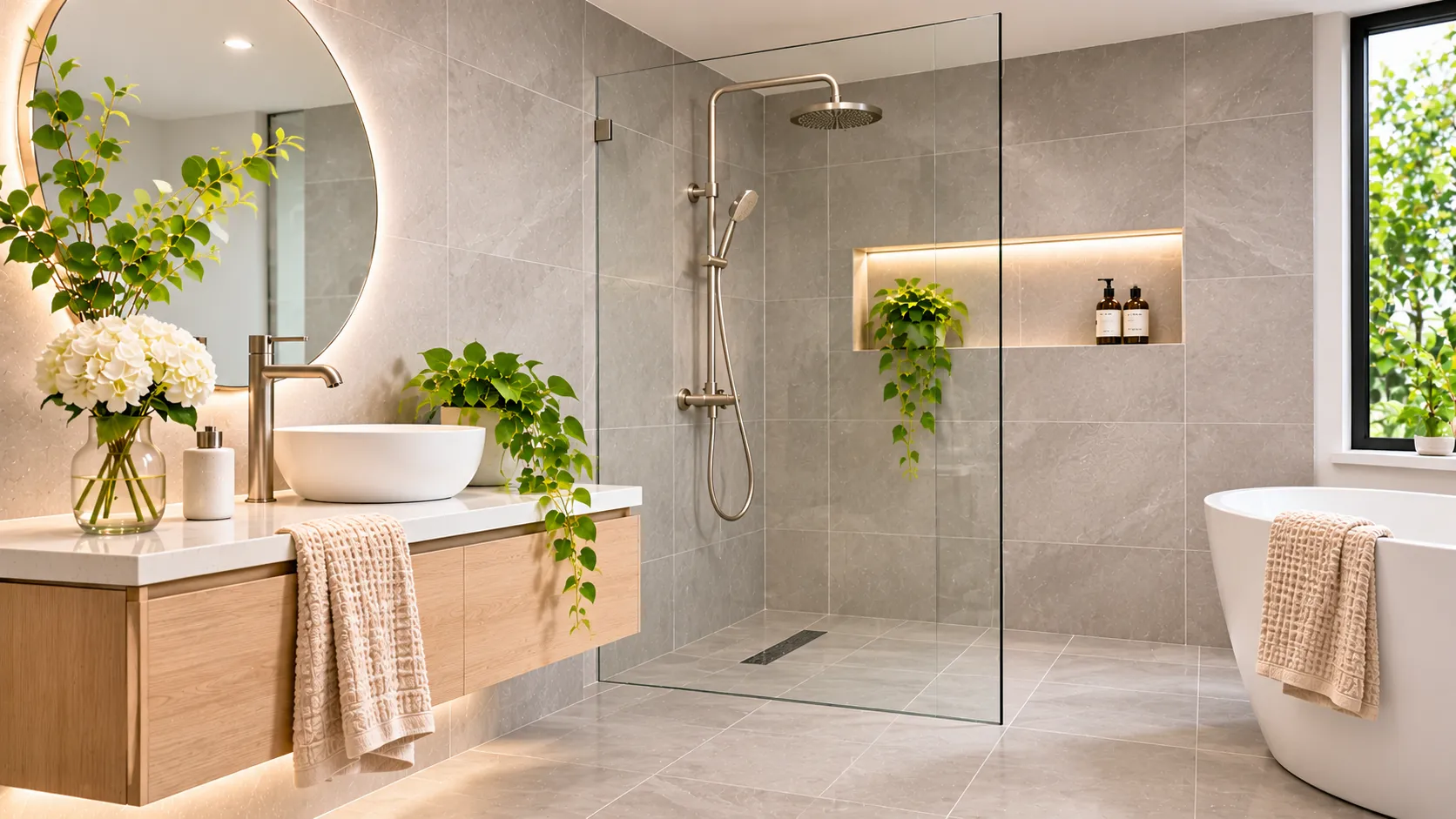
BEAUTIFUL SURFACES. PROPER PREPARATION.
Creating Beautiful and Functional Bathroom Surfaces
Bathroom tiling is about more than choosing an attractive surface. Tile selection, layout, preparation, waterproofing and finishing all contribute to the appearance, functionality and longevity of your bathroom. Discover how these elements come together in a carefully planned renovation.
OUR TILING AND WATERPROOFING SERVICES
Complete Bathroom Tiling Solutions
Explore the different tiling and waterproofing elements that help create a beautifully finished bathroom.
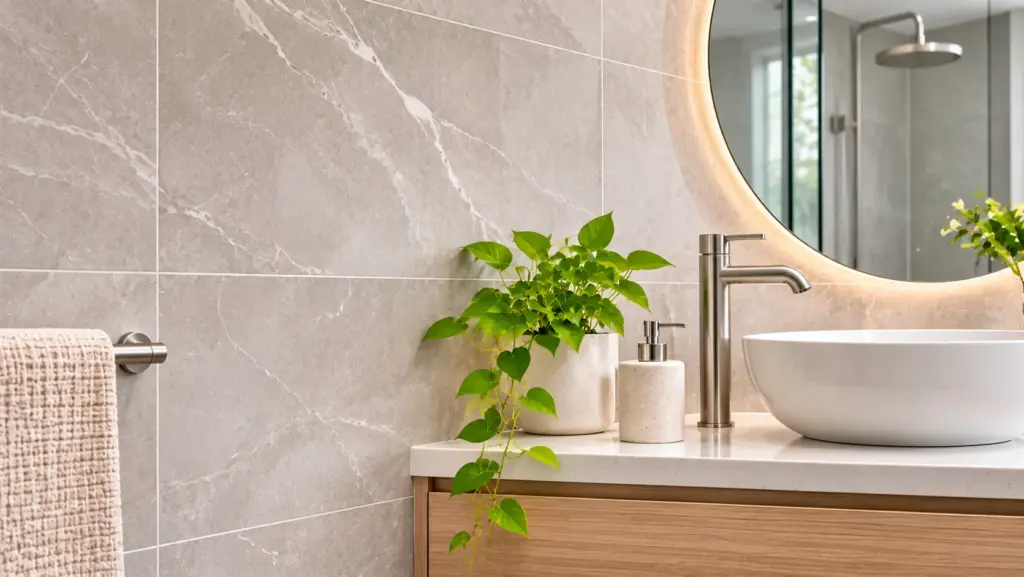
Bathroom Wall Tiling
Transform your bathroom walls with carefully selected tiles that complement your fixtures, fittings and overall design. Explore different tile sizes, patterns, textures and finishes to create a distinctive appearance.
Popular options: Subway tiles, large-format porcelain, marble-look tiles and textured feature tiles.
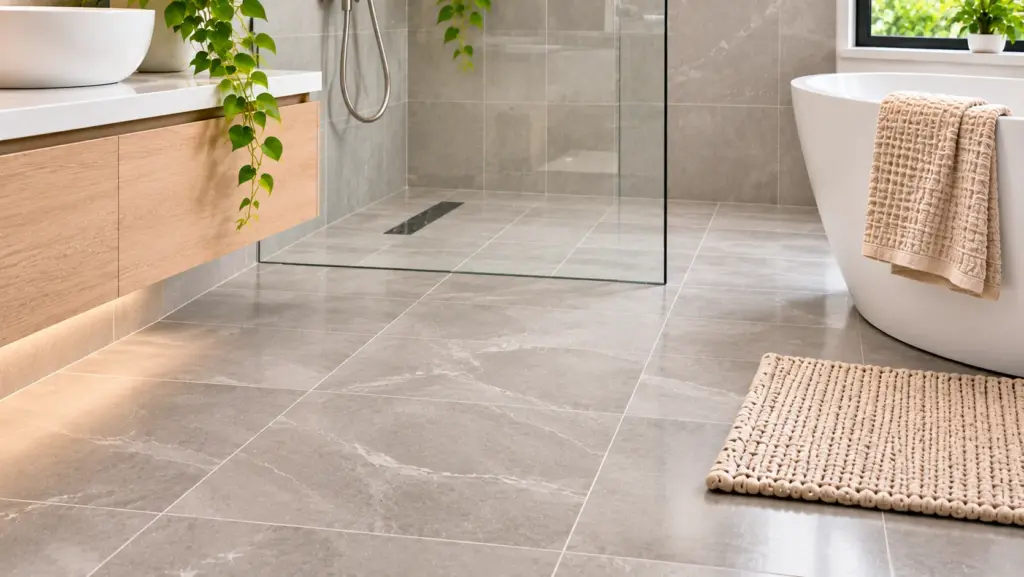
Bathroom Floor Tiling
Create a practical and attractive foundation with bathroom floor tiles suited to wet environments. Consider surface texture, slip resistance, tile dimensions and grout selections when planning your flooring.
Popular options: Porcelain tiles, stone-look tiles, textured finishes and contemporary large-format flooring.
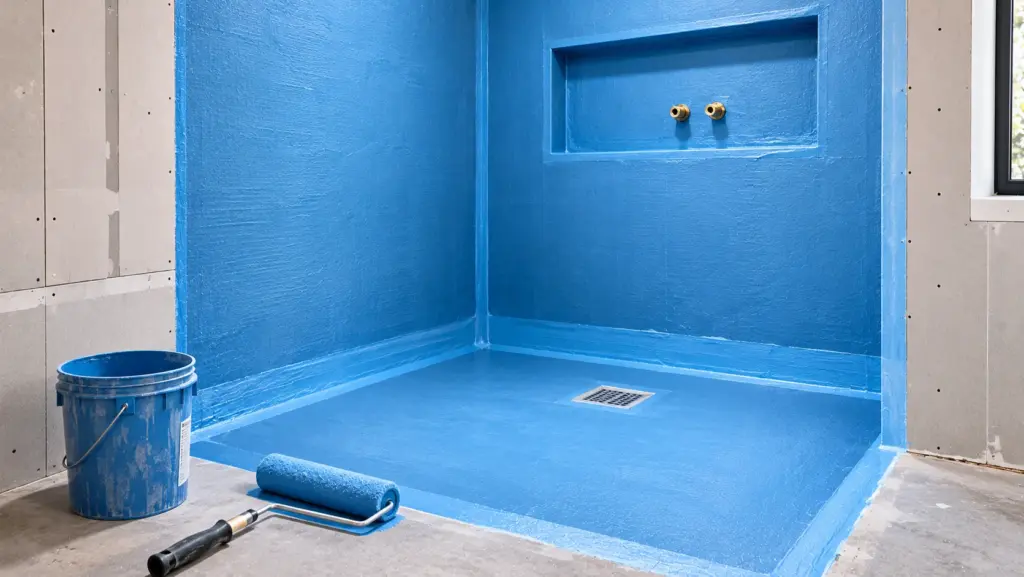
Bathroom Waterproofing
Waterproofing is an important part of bathroom construction and renovation. Appropriate substrate preparation, membrane application and detailing help protect building elements from water penetration.
Key areas: Shower floors, shower walls, bathroom floors, wall junctions and other designated wet areas.
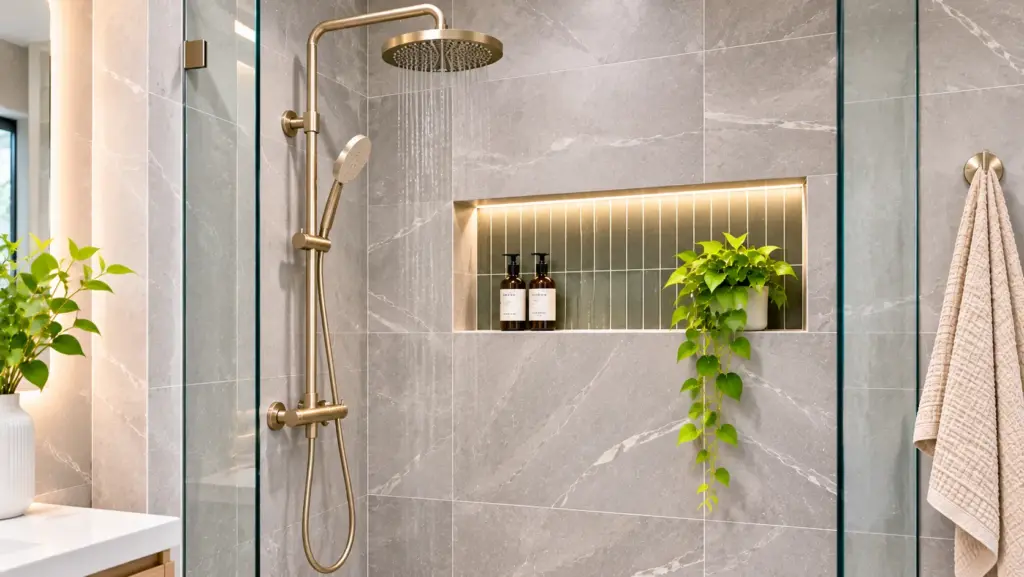
Shower Tiling and Niches
Create a cohesive shower area with coordinated wall and floor tiles, carefully considered tile layouts and practical recessed niches. Thoughtful detailing helps bring the shower design together.
Design options: Feature walls, tiled niches, contrasting floor patterns and coordinated shower finishes.
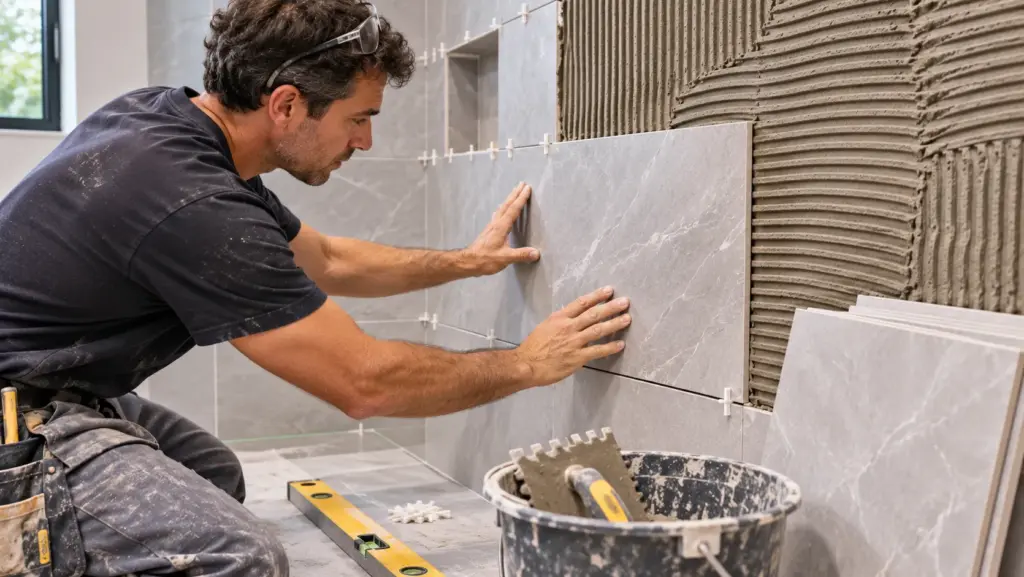
Tile Preparation and Installation
Good tiling begins with appropriate preparation. Surface condition, substrate suitability, layout planning and tile selection all contribute to achieving a neat and consistent finished result.
Considerations: Surface preparation, tile alignment, adhesive selection, spacing and installation detailing.
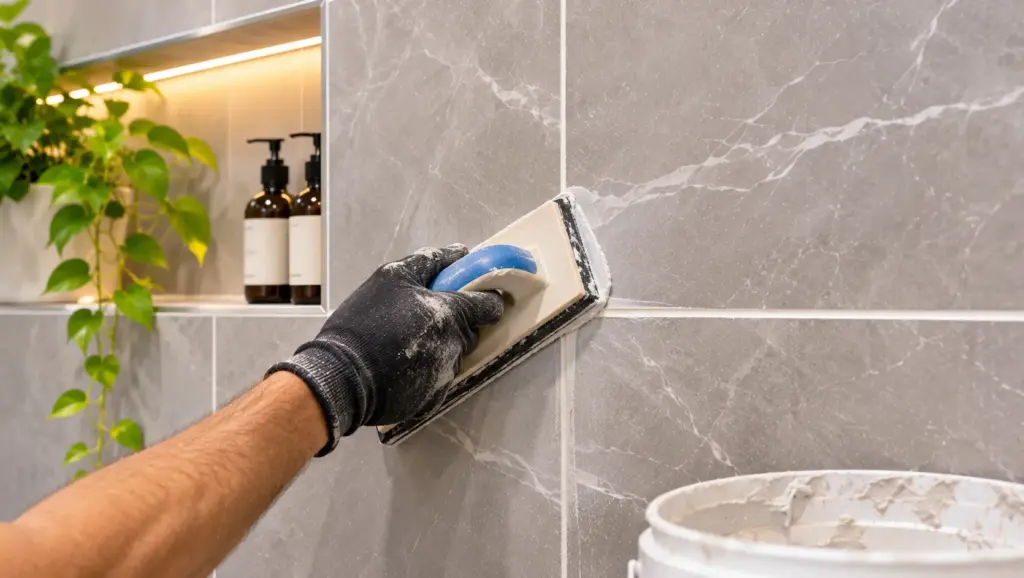
Grouting and Finishing
Grout colour and finishing details can make a significant difference to the final appearance of tiled surfaces. Coordinated grout selections help create either a seamless look or a more distinctive tile pattern.
Finishing options: Matching grout, contrasting grout, neat tile edges and coordinated surface transitions.
OUR PREFERRED TILE SUPPLIERS
Tiles to Transform Your Space
Discover beautiful tile collections from trusted suppliers,
with finishes and styles to complement your kitchen or bathroom renovation.
Beaumont Tiles
Extensive tile collections and finishes
Explore Collection ↗
Tile Factory Outlet
Tiles for kitchens, bathrooms and living spaces
Explore Collection ↗
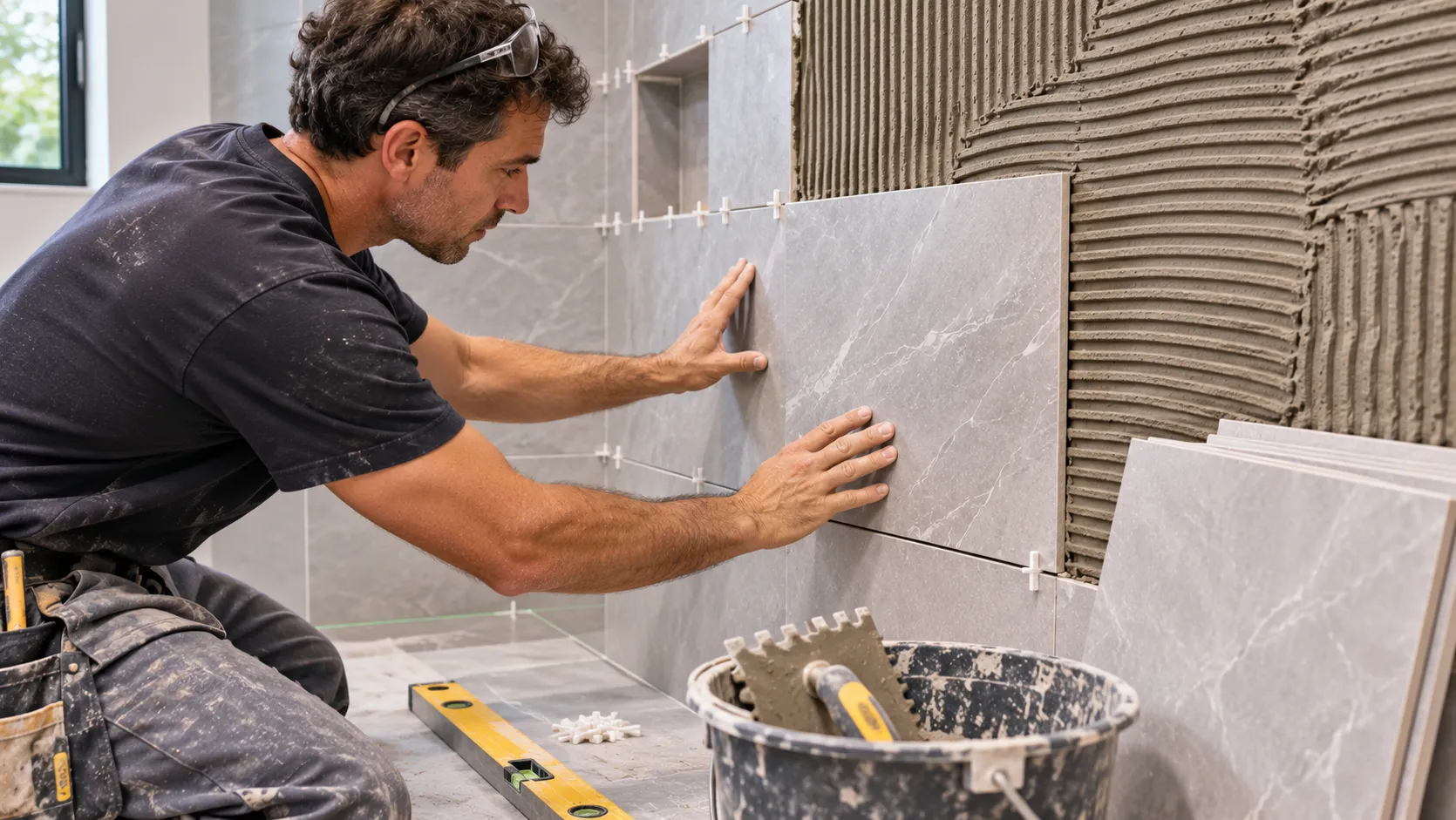
PROTECTION BEHIND THE FINISH
Why Bathroom Waterproofing Matters
Waterproofing plays a critical role in protecting bathroom structures from moisture and water penetration. Bathrooms contain several wet areas where appropriate waterproofing systems and careful installation details are particularly important.
From shower floors and walls to floor junctions and other designated wet areas, the waterproofing system must be suitable for the application and installed in accordance with relevant requirements.
- Appropriate substrate preparation
- Suitable waterproofing membrane systems
- Careful treatment of corners and junctions
- Attention to penetrations and plumbing fixtures
- Correct drainage and floor-fall considerations
- Suitable preparation before tiling begins
FIND YOUR PERFECT FINISH
Popular Bathroom Tile Styles and Materials
The tiles you select can influence the entire appearance of your bathroom. Explore some popular options and consider how different colours, textures and formats can complement your chosen design.
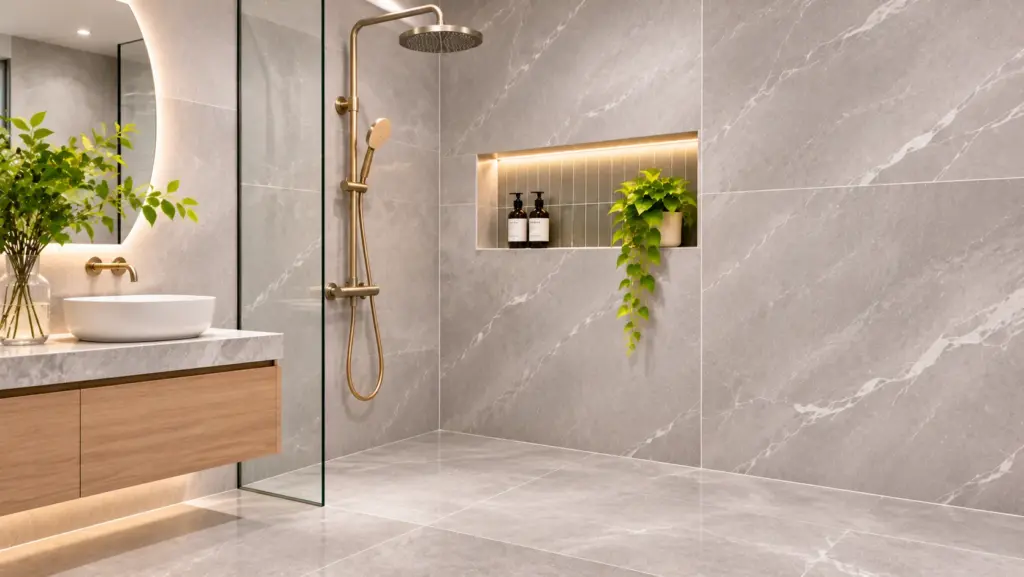
Large-Format Porcelain
Large-format tiles create a clean, contemporary appearance with fewer visible grout lines. They work particularly well in modern bathrooms with streamlined fixtures and simple colour palettes.
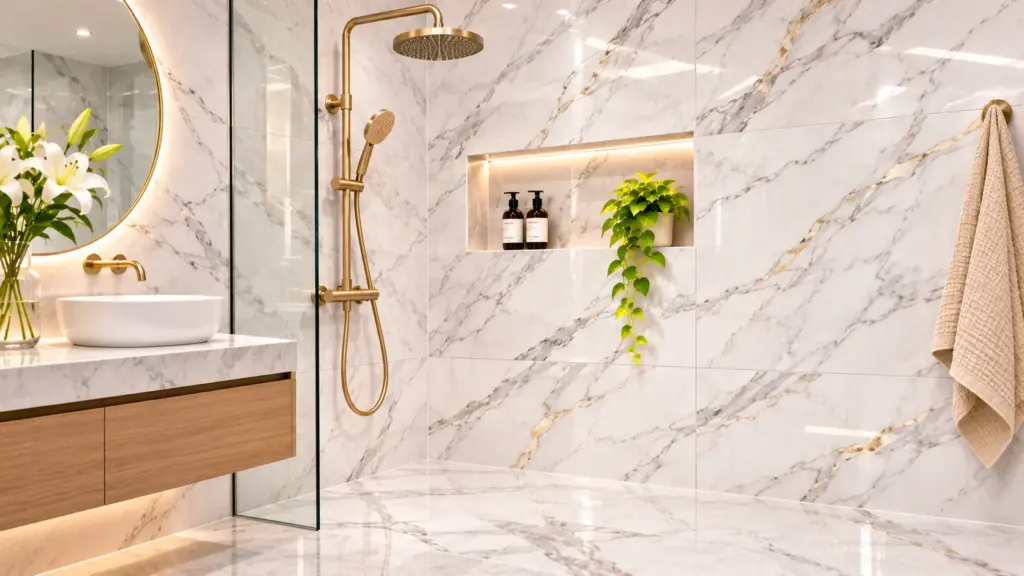
Marble-Look Tiles
Bring an elegant stone-inspired appearance to your bathroom with marble-look porcelain and ceramic tiles. Explore subtle veining, light backgrounds and more dramatic patterns.
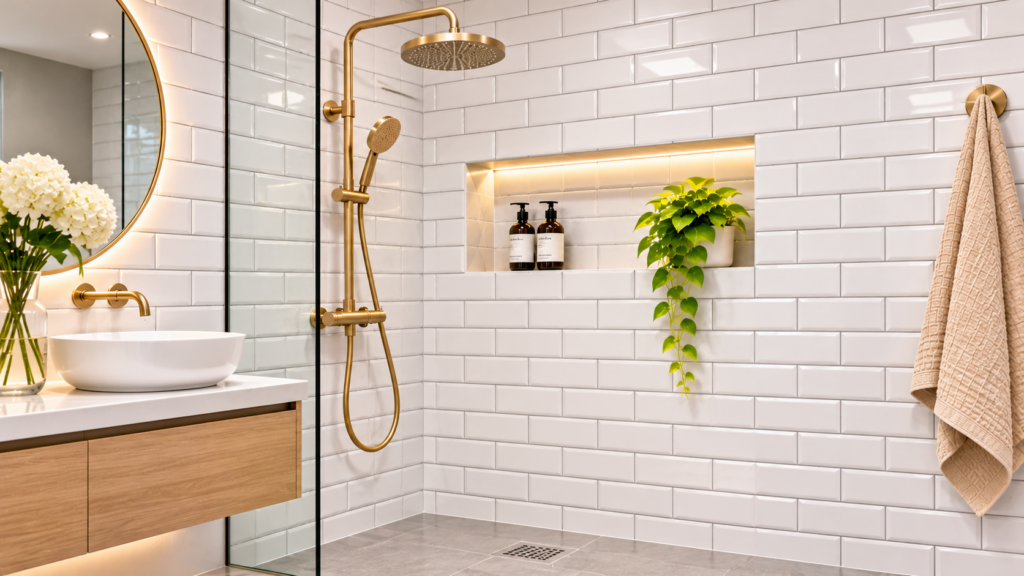
Subway Tiles
A versatile choice that suits contemporary, classic and Hamptons-inspired bathrooms. Subway tiles can be arranged in traditional brick patterns, vertical layouts or more distinctive configurations.
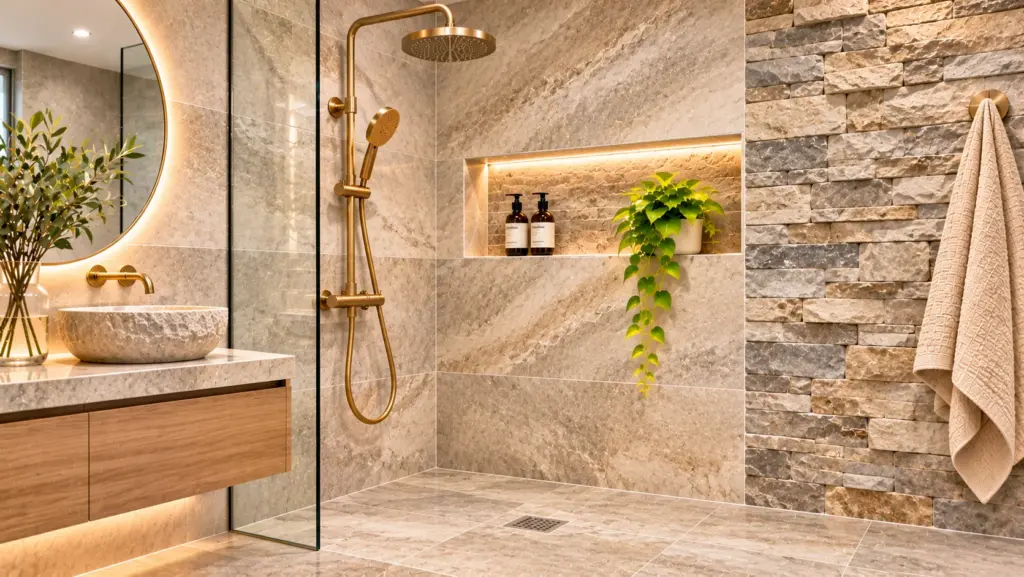
Natural Stone Finishes
Introduce natural texture and variation with stone-inspired surfaces. Consider the characteristics, sealing requirements and maintenance needs of natural stone products before selection.
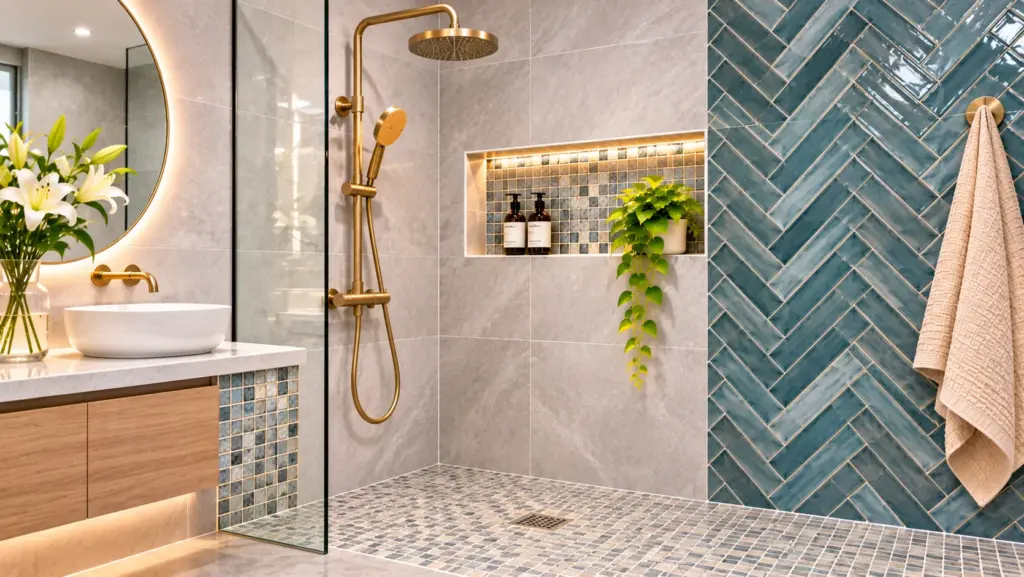
Mosaic and Feature Tiles
Add visual interest through smaller-format tiles, decorative patterns and feature surfaces. Mosaics can be particularly effective in shower niches, feature walls and selected floor areas.
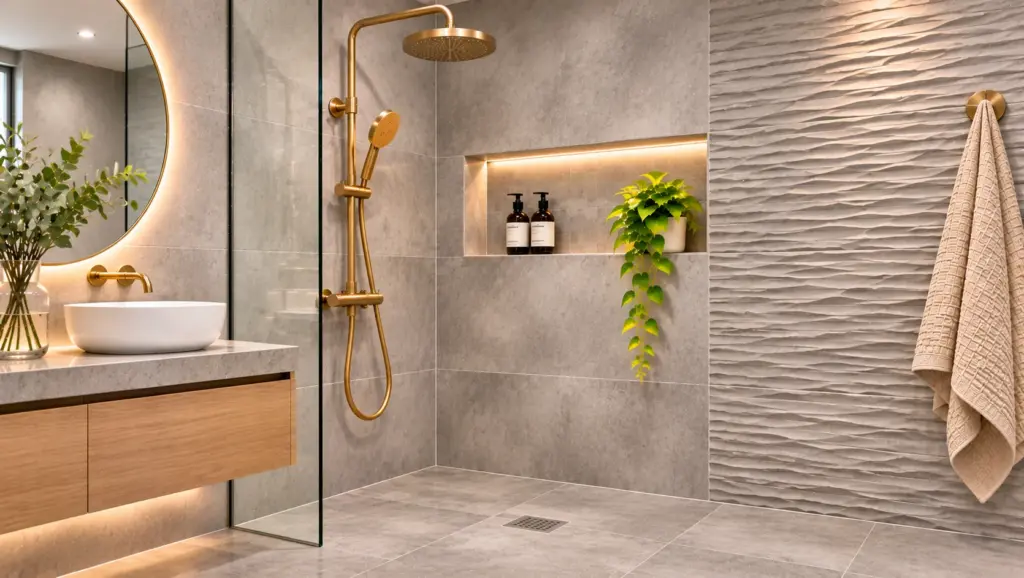
Textured and Concrete-Look Tiles
Create a contemporary, understated bathroom with concrete-look and textured tiles. These finishes complement minimalist, industrial and natural design styles.
THOUGHTFUL DESIGN. BETTER RESULTS.
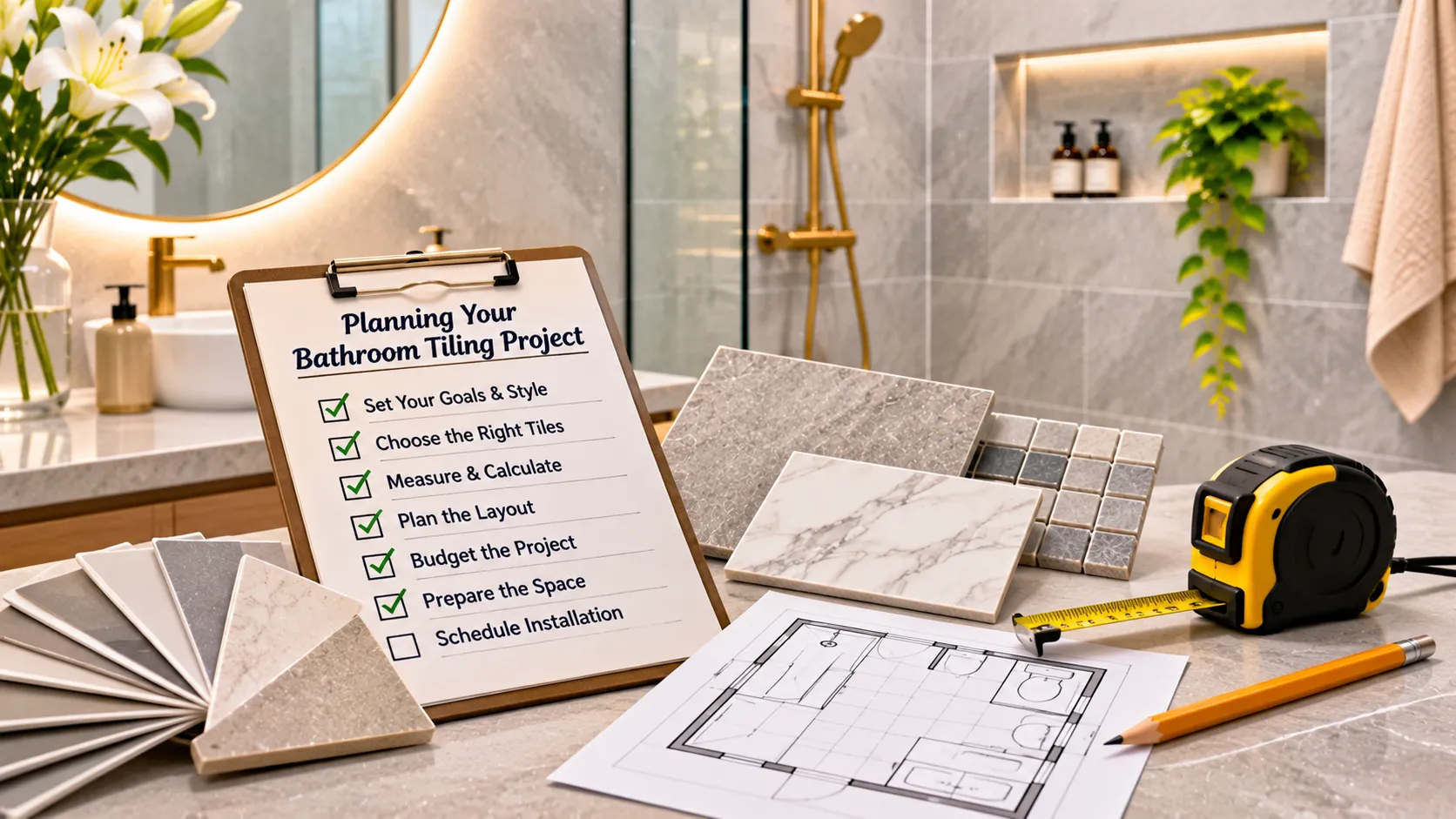
Planning Your Bathroom Tiling Project
Successful bathroom tiling involves more than choosing tiles from a showroom. The size and layout of the room, surface preparation, drainage, tile dimensions and waterproofing requirements all need to be considered.
Planning these details before installation helps create a cohesive appearance and reduces the likelihood of unnecessary changes during the renovation.
What to Consider Before Tiling
- Tile dimensions and overall layout
- Wall and floor substrate condition
- Suitable tile materials and finishes
- Slip resistance for wet floor areas
- Grout colour and joint spacing
- Drainage and appropriate floor falls
- Waterproofing requirements
- Tile edges, corners and transitions
A CAREFULLY PLANNED APPROACH
From Preparation to Beautifully Finished Tiles
Every stage of a bathroom tiling project contributes to the finished result. A structured approach helps coordinate preparation, waterproofing, tiling and finishing.
01
Inspect and Prepare
Assess the existing surfaces, layout and substrate requirements before preparing the area for the renovation.
02
Waterproof the Wet Areas
Prepare and waterproof the relevant areas using a suitable system and required installation details.
03
Install the Tiles
Set out and install the selected tiles, paying attention to alignment, spacing, patterns and transitions.
04
Grout and Finish
Complete grouting, finishing details and final checks to bring the tiled surfaces together.
FREQUENTLY ASKED QUESTIONS
Bathroom Tiling and Waterproofing FAQs
Find answers to common questions about bathroom tiling, waterproofing, tile selection and installation.
Waterproofing helps prevent water from penetrating building elements and causing moisture damage. It is particularly important in showers and other designated wet areas, where suitable waterproofing systems and installation details are required.
Yes. Where waterproofing is required, the relevant preparation and waterproofing work must be completed before tiles are installed. The system should be applied, detailed and allowed to cure in accordance with its manufacturer’s requirements.
Porcelain and ceramic tiles are popular bathroom flooring choices. The appropriate product depends on the intended application, surface finish, slip resistance, water absorption characteristics and manufacturer’s specifications.
Large-format tiles can work well in smaller bathrooms and may create a more continuous appearance with fewer grout lines. However, the room dimensions, drainage locations, floor falls and installation requirements should be considered before selecting tile sizes.
Porcelain tiles are generally manufactured from denser clay materials and fired at higher temperatures than standard ceramic tiles. They typically have lower water absorption. The best option depends on the specific product, intended location and manufacturer specifications.
A matching grout colour can create a more seamless appearance, while contrasting grout highlights individual tiles and their layout. Consider the tile colour, pattern, maintenance requirements and overall bathroom design when selecting grout.
In some situations, tiling over existing tiles may be possible, but the existing surface must be assessed for stability, condition, suitability and additional build-up. Waterproofing and drainage details also need to be considered. It is not appropriate for every bathroom.
The timeframe depends on the size of the bathroom, surface preparation, waterproofing system, curing requirements, tile complexity and overall renovation scope. A project-specific schedule is the best way to estimate the work involved.
Yes. Bathroom waterproofing in Australia is subject to relevant building requirements and standards, including the National Construction Code and applicable provisions of AS 3740. The specific requirements depend on the building and project. Waterproofing work should be undertaken by appropriately qualified and licensed professionals where required.
THE FOUNDATION OF A BEAUTIFUL BATHROOM
Ready to Plan Your Bathroom Tiling Project?
Whether you’re considering new bathroom floor tiles, a complete wall and floor transformation or waterproofing as part of a renovation, Simply Chic Bathrooms and Kitchens can help you explore the possibilities. Get in touch to discuss your project and take the next step towards your new bathroom.